

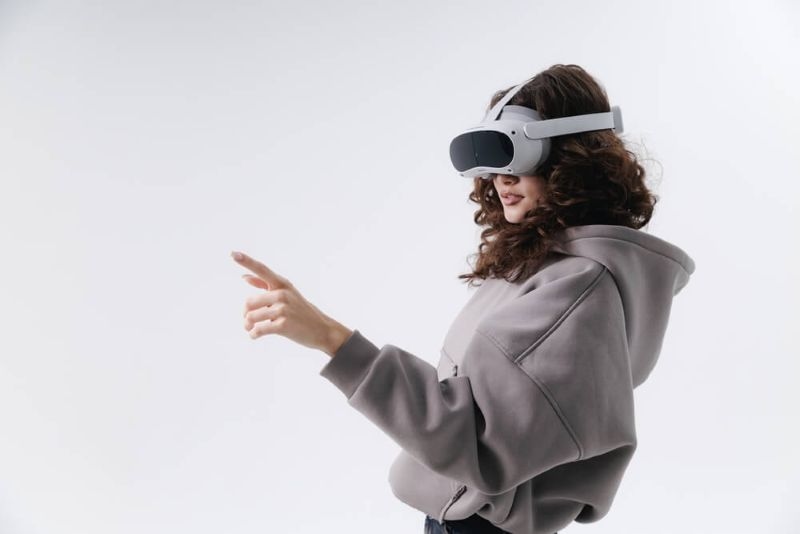
Technology keeps changing how we connect with the world, and honestly, augmented reality is one of the coolest things happening right now. Not long ago, AR felt like something you’d only find in video games or wild tech demos. Now, it’s slipping into daily life in ways we couldn’t have predicted.
Let’s dig into where AR is headed, especially with smart glasses, mixed reality applications popping up in surprising places, AR shaking up retail, and all sorts of new digital experiences. Plus, there’s this whole wave of spatial computing that’s just getting started.
Augmented reality technology basically drops digital bits—pictures, words, sometimes even moving graphics—straight onto what you’re already looking at. It’s nothing like VR, where you’re cut off from your surroundings. With AR, your real world stays right there, just upgraded. That’s the beauty of it. You stay grounded, but you get extra info or visuals right when you need them.
Phones kicked things off for AR. Point your camera, and suddenly there’s a dancing cat on your coffee table. Right now, all eyes are on wearables and smarter tech. We’ve got better sensors and AI that actually make AR feel natural, not awkward or bulky like before.
AR smart glasses are where things get interesting. Picture this: you throw on a pair of glasses and, suddenly, your texts, maps, and updates show up right in your line of sight. No more digging around for your phone or missing your exit because you were distracted. It’s all just there, following you through your day.
Big players are all in. Apple’s Vision line and Microsoft’s HoloLens are already showing how smart glasses can help at work or in creative projects. Meta’s chasing the dream of everyday AR with its own hardware and research.
As these glasses get more comfortable, with better batteries and sharper displays, they’ll just blend into your routine. Need directions while walking? Want to translate a sign instantly? AR glasses will handle it, making everyday life a little less clumsy and a lot more connected.
Mixed reality’s another huge step. Here, digital objects don’t just float on top of your view—they actually interact with the real world around you.
In classrooms, students can walk around a 3D model of a volcano or the human heart, right at their desks. On the job, engineers might tweak a virtual machine sitting on the workbench in front of them. This kind of hands-on interaction just makes complicated stuff easier to grasp.
Healthcare’s seeing real benefits too. Surgeons can check patient data during an operation, while med students practice on virtual bodies that behave like the real thing. And as the tech gets better and cheaper, you’ll see mixed reality showing up everywhere from hospitals to design studios.
Walk into any modern store—or just open your favorite app—and you’ll see AR everywhere. Retailers aren’t just selling you a product; they’re letting you see how it fits into your life.
Want a new couch? Use AR to see if it actually fits in your living room. Thinking about new sneakers? Try them on virtually, no crowded dressing room needed. Even makeup brands are letting you test out shades on your phone before you commit.
This isn’t just a gimmick. AR gives shoppers more confidence and cuts down on returns. As online and in-store shopping keep blending together, AR is becoming a key tool for personalized, interactive experiences. Retailers can mix your preferences with AR to offer smarter recommendations and demos that actually matter.
Watching is fine, but honestly, people want more than that—they want in on the action. That’s the magic of AR. Suddenly, your living room isn’t just a living room anymore; it’s a place to play, learn, create, and show off what you can do.
Concerts, sports, and museums are layering in AR to tell richer stories. Social media’s fun filters and effects are all powered by AR. The tech’s evolving fast, so what started as a novelty is now a real way for people to connect and play.
Brands are catching on, too, using AR to make marketing less about flashy ads and more about interactive experiences. As AR tools get easier to use, expect a flood of new creators jumping in, making digital worlds that pull you in and invite you to explore.
Spatial computing’s starting to change the game. Devices aren’t just passively recording the world anymore—they’re figuring it out in real time. They see the space around you, map it, then drop digital content into your environment with uncanny accuracy. All of a sudden, digital and real life start to mesh, and the way we interact just clicks.
So, what’s driving this shift? It’s the new sensors, improved computer vision, and way more intelligent AI. Now, devices see surfaces, track how you move, and understand your gestures or even your voice. Thanks to these advances, mixed reality and AR smart glasses finally work—they’re not just buzzwords anymore.
As spatial computing grows, augmented reality is moving away from screens. We’re heading for a world where your home, office, or even a park bench could react to you, layering in digital info through objects you use every day.
AR isn’t just about games or shopping anymore. It’s changing the way people work. Remote teams can gather around digital objects as if they’re in the same room. Field workers get step-by-step instructions laid right over the equipment they’re fixing. It’s faster, more accurate, and honestly, just makes life easier.
Training’s getting a makeover, too. Forget about flipping through those heavy manuals. Forget those massive manuals. Now, employees jump right into digital guides that walk them through each step. Mixed reality and spatial computing aren’t just tech jargon—they’re actually helping people work smarter in all kinds of fields.
As offices lean more into digital tools, AR steps in to connect traditional hands-on work with all the new digital systems coming their way. Suddenly, work feels less like staring at a screen and more like solving real problems, right in front of you.
The future of augmented reality is all about making it part of everyday life—no fuss, no friction. It’s quietly turning into the foundation for how we interact with digital worlds. As hardware gets quicker and prices drop, AR stops feeling like a sci-fi prop and just becomes another tool we use. Shopping isn’t the same.
The way we learn, work, and even unwind with digital content is changing, too. Honestly, it won’t be long before AR feels as natural and necessary as your phone.
It’s tech that puts digital stuff—like images or info—on top of the real world, using your phone or smart glasses.
You’ll get hands-free info, directions, and ways to communicate, all while keeping your hands free. Every day tasks get quicker and smoother.
With AR, shoppers can see products in their space before buying. That boosts confidence and makes shopping more fun.
Spatial computing helps devices understand and map real spaces. That’s what lets AR interact naturally with the world around you.
This content was created by AI