

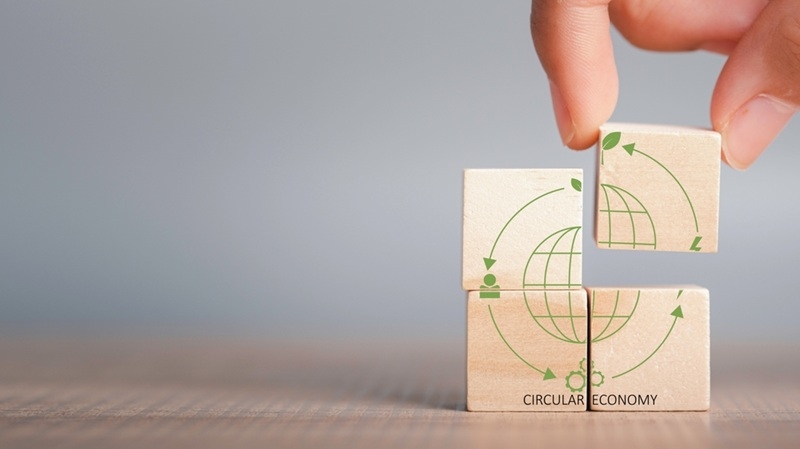
Manufacturing has always been about turning raw materials into something useful. The problem is what happens after. Traditionally, the story ends with “use it, toss it, replace it.” That linear model is getting harder to justify, not just ethically, but financially. Materials are expensive. Supply chains break. Customers notice waste. Regulators notice too.
So manufacturers are doing what manufacturers do best: redesigning the system.
Circular economy innovation is the shift from a straight line to a loop. Products get designed to last longer. Parts get recovered. Materials get reused instead of dumped. Waste becomes a signal and a resource, not just a disposal problem.
And yes, it can feel like a big change. But in practice, it often starts with small moves that quickly pay for themselves.
The easiest way to understand circular manufacturing is to look at where value disappears.
Value disappears when:
Circular work aims to stop that value loss.
In factories, circularity usually shows up in three areas:
It is not a single “green initiative.” It is a business redesign.
A lot of sustainable production models sound great in presentations and then collapse in real operations. The ones that stick are the ones that reduce costs or risk.
Examples manufacturers are adopting:
The theme is simple. Keep material in use longer. Avoid buying what can be reused.
Most “waste” in manufacturing is not garbage. It is often scrap, rejects, and rework. In other words, it is a process problem.
That is why waste reduction technologies are often quality technologies:
Even small scrap reductions can save big money in high-volume production. They also reduce the load on recycling systems downstream.
Less waste upstream is always cheaper than cleaning it up later.
Recycling used to be limited by one major issue: mixed materials. When products combine plastics, adhesives, coatings, foams, and metals, separation becomes hard. That is where recycling technology advancements are changing the game.
Key improvements include:
The big win is quality. Recycled materials are more valuable when they are consistent and clean. That consistency makes manufacturers more willing to use recycled inputs in production.
Circular manufacturing can’t stay inside one factory. Materials move across suppliers, distributors, customers, and recyclers. That is why eco friendly supply chains focus on collaboration and visibility.
What eco-friendly supply chains often include:
Circularity fails when the return pathway is weak. If products never come back, the loop stays theoretical.
So manufacturers are investing in reverse logistics and recovery networks. Not always glamorous. Very effective.
One of the most practical green manufacturing trends is simply designing products that can be repaired and disassembled.
Design choices that support circularity:
This is not only good for recycling. It is good for service. It improves customer experience. It can even reduce warranty costs because parts replacement becomes easier.
Recycling is useful, but remanufacturing often preserves more value.
Remanufacturing means restoring a used component or product to a performance standard. Instead of melting everything down, the manufacturer recovers parts, tests them, replaces what’s needed, and sends the product back out.
Industries where remanufacturing thrives:
It can deliver strong margins because the value of a component often exceeds the value of raw material. It also reduces dependence on fresh inputs during supply shortages.
Circularity works when it is measurable.
Manufacturers track metrics like:
When these metrics improve, circularity stops being a slogan and becomes operational performance.
The second mention of circular economy innovation matters because pilots are easier than full rollout. Scaling requires alignment across design, procurement, production, logistics, and external partners.
Scaling challenges usually include:
The companies scaling successfully tend to start with one product line or one plant, prove the economics, then expand.
They also build standards. Standards make circularity repeatable.
The second mention of waste reduction technologies belongs here because the fastest circular gains often happen inside the plant. Scrap reduction saves money immediately. It reduces landfill waste. It reduces procurement demand. It improves throughput.
A manufacturer does not need a global take-back system to reduce scrap. They need better process control, better inspection, and better accountability. That’s why scrap reduction is often the gateway to bigger circular work.
The second mention of recycling technology advancements matters because material recovery is becoming strategic, not optional. Battery minerals, specialty plastics, and high-grade metals are expensive and geopolitically sensitive.
Better recovery systems reduce reliance on unstable supply sources and reduce long-term procurement risk. For manufacturers, that can matter as much as cost.
The second mention of eco friendly supply chains highlights the practical truth: circularity depends on return paths.
If customers can’t return products, or if returns are too costly, the loop breaks. That’s why companies are using:
The goal is simple. Make returns easier than disposal.
The second mention of green manufacturing trends is the mindset shift. Waste is no longer “just waste.” It is a value leak.
If a factory discards usable material, it is discarding:
Circular manufacturing closes those leaks.
Circularity is not just a sustainability initiative. It is a smarter way to run production when materials are costly and supply chains are unpredictable.
Manufacturers that design for repair, reduce scrap, recover materials, and build reverse logistics systems gain cost savings and resilience. They also build trust with customers who want products that last and don’t feel disposable.
Circular economy work is not a trend. It is the next phase of manufacturing efficiency.
It is the shift toward systems that keep materials in use longer through repair, reuse, remanufacturing, and improved recycling instead of sending value to waste.
Yes. It can reduce raw material purchases, lower scrap, reduce downtime, and create revenue from refurbishment or recycled-content product lines.
Reducing scrap and improving internal material recovery is often the quickest upgrade because it saves money immediately and improves production efficiency.
This content was created by AI