

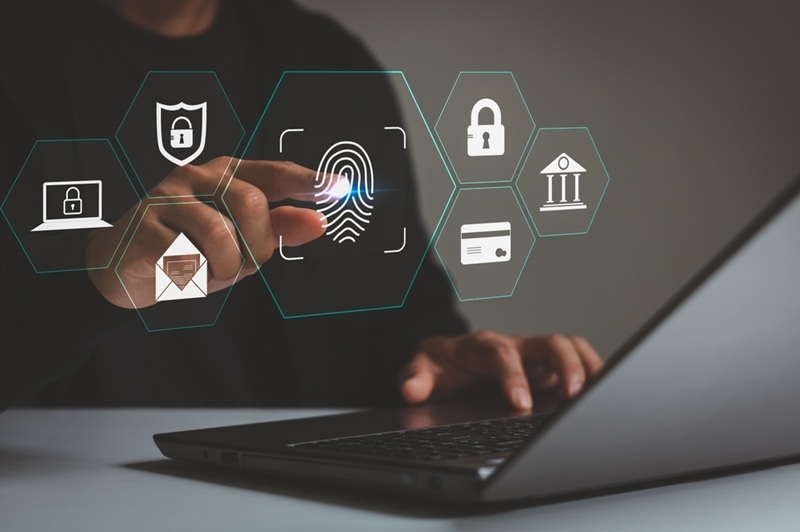
Digital transactions and connected ecosystems are redefining how we secure our data and identity through biometric security. Organizations are embracing smarter, faster, and more secure ways of authenticating users, including facial recognition capabilities in smartphones, advanced digital identity verification technology used by financial institutions, and innovations in secure login methods. As well as fingerprint authentication and emerging privacy technologies, biometric security is changing how we protect sensitive information across the public and private sectors.
Passwords are not enough to secure today’s cyber environments; what is needed is a full identity system that is seamless, intelligent, and almost impossible to steal. This is where biometric security comes into play.
Biometric security refers to authentication methods based on one's biological characteristics, such as fingerprints, facial geometry, iris patterns, or voice. Biometric identifiers differ from [common] authentication methods in that they are unlike traditional passwords: they tend to be very personal to a given individual and are typically much more difficult to mimic.
Biometric authentication systems are constantly evolving to enhance the accuracy of their services while increasing their false acceptance rates, as specified by guidance from the National Institute of Standards and Technology. The Cybersecurity and Infrastructure Security Agency has similarly specified biometrics as an extremely valuable component of multi-factor authentication structures.
Facial recognition technology maps facial characteristics to authenticate users within its system by comparing unique facial features with pre-existing records. It is typically used for authentication by programs such as airports, financial (bank) applications, and the government.
For example, the U.S. Department of Homeland Security is using technology products to increase efficiency in how border patrol operates and to protect our nation. Overall, people find these technologies beneficial because users can authenticate without physical contact and produce an identification within seconds.
However, according to reputable sources such as the Federal Trade Commission, organizations should use facial recognition technology responsibly by being transparent, protecting data, and obtaining appropriate consent before implementing biometric security systems.
Using facial recognition technology can enhance authentication and lead to new avenues for password-less login.
Digital Identification Verification Systems have been an important System for financial institutions (Banking & Non-Banking) as they have combined the means of Biometrics plus Document Verification & HMDA (Housing and Mortgage Disclosure Act) data through background checks in real-time.
As the U.S. Treasury Department has indicated, stronger Identity Verification is necessary to prevent Financial Fraud and Identity Theft, as banks are required to follow KYC (Know Your Customer) regulations for their customers while providing the best possible Customer Experience. Using Biometric security, ID Verification systems can also mitigate financial Institutions' fraud risk, expediting the User Approval process.
Today's businesses need more than just one way to verify identity; they need a combination of multiple verification methods (e.g., fingerprint, face, and behavior) that work together to build a complete security solution.
Yes! Fingerprint authentication remains one of the most reliable biometric authentication methods. It is used in many forms of technology (e.g., mobile devices, computers, and secured doors).
Additionally, the FBI has used fingerprint databases to confirm someone’s identity for many years, demonstrating that this method has been in use for some time and continues to have an excellent track record.
Fingerprint authentication provides several other advantages:
When fingerprint authentication tools are utilized as part of a digital identity verification solution, they can provide multiple levels of protection against unauthorized access attempting to breach your organization.
Innovations that improve login security have changed how we log in to apps and devices. Innovators have created passwordless, adaptive risk-based, and device-based biometric systems that are commonplace across industries today.
The Federal Reserve and other agencies are encouraging banks and other organizations to upgrade their authentication systems with advanced technologies to help protect against cyber threats. Innovations in secure logins have also helped eliminate passwords from the login process, thereby reducing instances of phishing and credential stuffing. By removing passwords entirely from the authentication equation, organizations have eliminated an extremely weak link in their cybersecurity chain.
Biometric Security Development Will Altogether Concatenate Privacy Recent Trends.
Expanded biometric security solutions require changes to data! Privacy is the number one concern for biometric security.
Currently, the most important biometrics privacy technology trend is
(1) encrypted biometric databases,
(2) decentralized biometric storage systems
(3 ) zero-knowledge proof authentication, and
(4) privacy consent user verification process.
All four trends provide methods to ensure that biometric security solutions meet ethical and legally compliant standards.
Currently, Governments are focusing on addressing privacy in the biometric security market by implementing framework regulations and continuing to review them, providing a balance between continued innovation and continued protection.
The European Commission is working to implement regulatory compliance under the GDPR (General Data Protection Regulation), while US government agencies are still conducting regulatory compliance framework reviews (standards and compliance requirements) for the use of biometrics in government operations.
Technology Companies can manage biometric security with privacy by using biometrics as a verification tool if organisations operate with appropriate governance policies, develop robust encryption, and apply the principles of privacy by design throughout the entire data processing cycle.
In addition, current digital identity verification systems incorporate privacy-by-design principles, ensuring that biometric data remains protected throughout the process.
Using biometric security helps companies protect themselves and also enables them to compete with other companies. Companies offer customers both convenience and trust by providing a way to easily access their ill. New secure login options give customers a simple way to access their accounts and an easy way to use fingerprint and face recognition systems, helping build confidence in those new technologies.
Biometric security has already become a foundation of digital infrastructure across many different industries, including government and financial. With both new regulations and privacy technology trends, biometric security will become a very secure and sophisticated part of our future society.
Biometric security was once thought to be a thing of the future but today, it is very much a reality. With many organizations using biometric technologies such as facial recognition or fingerprint scanners combined with digital identity verification and secure logins, companies are building safer ways to securely access digital resources.
As biometric technologies advance with new privacy trends, biometrics will become more refined, secure, and user-friendly. Those companies that invest in biometric technology now will be well-positioned to become trusted leaders in compliance and innovation moving forward.
The future of authentication will be based on biometrics; therefore, you will be provided with an authentication experience that is very personal, easy, and highly powered by biometrics.
Many people are turning toward Biometric Security for their personal and business accounts today. Not only is it less susceptible to fraud, but it is also more secure than Passwords. Passwords can be guessed, stolen, reused on multiple platforms,and compromised through data breaches. Therefore, they have weak security compared to Biometrics which rely on the unique biological characteristics that only belong to you.
By using Biometrics (to authenticate your identity), validation of Official Government Issued Identity Documents and matching to the respective Identity Document with a database cross-check is the most reliable method of confirming that you are the actual person claiming that Identity. This dramatically reduces the likelihood of someone else impersonating you; and helps organizations meet their Financial/legal obligations.
Absolutely. Privacy Technology Innovations which include encryption, decentralized storage,and consent-based authentication provide enhanced security for your biometric data while also ensuring compliance with Data Protection Standards Around The World.
This content was created by AI