

Delivery used to be a simple promise: “It’ll arrive in a few days.” Now customers expect updates every five minutes, two-hour windows, and a photo proving the box made it to the doorstep. Logistics teams feel that pressure daily. So do retailers. So do drivers.
That’s why autonomous delivery systems aren’t just a tech headline anymore. They’re a response to a messy reality: the last mile costs a lot, fails often, and burns time in traffic, parking, and building access. Automation is one way to tighten the process.
Not to replace humans everywhere. To remove the most repetitive parts and reduce the “why was this so hard” moments.
In 2026, autonomy isn’t one machine. It’s a mix of tools that do different jobs.
Examples include:
Most of these systems are semi-autonomous. Humans still monitor fleets, intervene when something goes wrong, and handle edge cases. Autonomy is about reducing manual work, not pretending the world is perfectly predictable.
The hardest part of delivery isn’t moving goods across the country. It’s the last few miles.
The last mile is expensive because:
That’s why the push toward automation is strongest in dense delivery regions where time savings add up fast.
Drone delivery technology works best when the package is small and the delivery zone is controlled. Think urgent items, short distances, and clear landing rules.
Where drones fit well:
Where drones struggle:
Drones aren’t trying to replace delivery trucks. They’re more like a specialty tool. Amazing in the right scenario. Unhelpful in the wrong one.
The most realistic path for self driving delivery vehicles is not chaotic city driving first. It’s predictable routes.
Examples:
Vehicles can carry far more than drones or sidewalk robots, which makes them attractive for grocery and parcel delivery. But the safety bar is high. The public expects these systems to behave better than human drivers, not equal to them.
That’s why companies often start small, expand slowly, and use remote supervision as a safety layer.
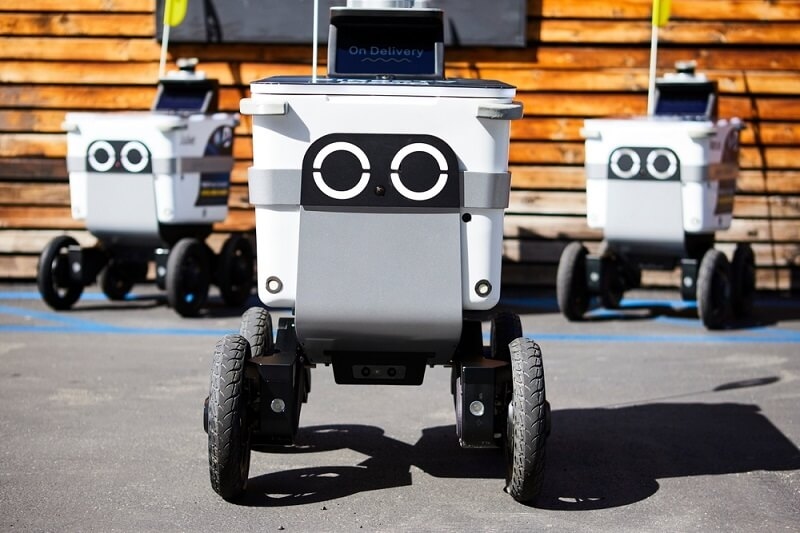
Sidewalk robots aren’t glamorous, but they solve a common problem: short-distance deliveries that waste a driver’s time.
They work well for:
The benefit is cost control. Robots can run frequent loops without overtime, fatigue, or parking issues. The downside is speed and terrain. Stairs, crowded sidewalks, and rough weather are real obstacles.
Still, in the right neighborhoods, they make sense.
Hardware gets the headlines, but AI logistics automation often creates the biggest operational gains. It improves the planning layer, which is where many delivery failures start.
AI can help with:
Even companies with no robots can save money with better planning. Autonomy becomes more effective when the planning is strong.
Many customers say they want speed, but what they really want is reliability. “Arrives between 2 and 4” and actually arriving in that window builds trust.
This is why last mile systems are shifting toward:
That is also where lockers and smart mailrooms come in. Not exciting, but extremely effective.
Last mile delivery innovation isn’t only about vehicles. It’s also about the delivery environment.
Some of the biggest improvements come from:
Autonomous tools work better when the environment supports them. If a robot can’t get through a gate, it doesn’t matter how advanced the robot is.
Smart supply chain solutions connect inventory, warehouses, transportation, and customer demand in one coordinated system.
That matters because autonomy depends on accuracy:
The most successful logistics operations treat autonomy as one piece of a larger redesign. First fix the basics. Then automate what is repeatable.
Autonomy changes labor patterns. Some roles shrink. New roles grow.
New and growing work includes:
Drivers aren’t disappearing overnight. Many deliveries still require human judgment: large items, complex buildings, customer interaction, and unpredictable routes. The near-term future looks hybrid.
Autonomous delivery doesn’t scale without trust.
The big hurdles:
One high-profile incident can stall deployment. That’s why companies move cautiously.
The second mention of autonomous delivery systems belongs here because the future isn’t “everything becomes autonomous.” It’s targeted adoption.
Expect more:
The most efficient delivery networks will blend humans and machines instead of choosing one.
The second mention of drone delivery technology matters because drones are powerful when used correctly. They will likely grow in medical, rural, and urgent delivery scenarios, not as the default option for every package.
If the delivery is small, time-sensitive, and hard to reach by road, drones win. Otherwise, ground delivery still dominates.
The second mention of self driving delivery vehicles highlights the realistic expansion path: controlled routes first, complexity later.
As systems prove reliability, they move from:
Scaling is less about speed and more about trust and consistency.
The second mention of AI logistics automation matters because fleets are becoming mixed. Human drivers, robots, drones, and vans operating together require coordination.
AI becomes the dispatcher, the planner, and the exception manager. Without that layer, autonomy creates chaos instead of efficiency.
The second mention of last mile delivery innovation is a reminder that the biggest cost drains are failed deliveries and reattempts. Secure drop-off systems, lockers, and better building access solve problems that vehicles alone cannot.
If delivery succeeds the first time, costs drop and customer satisfaction rises. Simple.
The second mention of smart supply chain solutions ties everything together. Autonomy improves delivery, but only when inventory accuracy, warehouse speed, and routing quality are already strong.
A sloppy supply chain makes autonomy look bad. A disciplined supply chain makes autonomy look like a superpower.
The future of delivery isn’t one robot replacing one driver. It’s a network that uses the right tool for the right job. Autonomous delivery will grow where it saves time, reduces cost, and improves reliability. Humans will stay central for complex deliveries and exceptions. AI will coordinate it all behind the scenes.
That’s the real shift. Logistics is becoming more intelligent, more modular, and less dependent on a single method of delivery.
Not in most cases. Most systems are supervised and still rely on humans for exceptions, maintenance, and complex deliveries.
It can be safe when deployed in controlled zones with strong safety protocols, but weather, payload limits, and regulations still restrict wide adoption.
Last-mile delivery involves many stops, traffic delays, building access issues, and failed delivery attempts. Automation aims to reduce wasted time and improve success rates.
This content was created by AI