

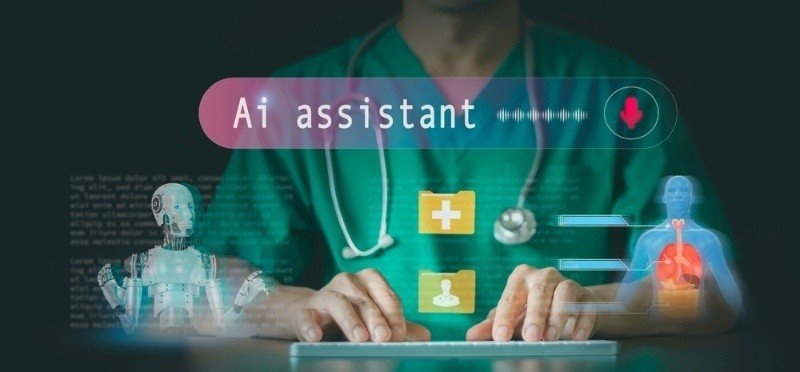
Think about how much time healthcare teams lose on everything swirling around patient care instead of actual patient care. They organize notes, double-check records, track referrals, juggle appointments, and chase missed follow-ups. It’s all necessary, but it pulls clinicians away from people who need them. AI agents are starting to pick up parts of these routines, especially where the process is predictable and messy. The point isn’t just automation. The point is making things run smoother and connecting the dots in all that coordination.
Good AI solutions don’t force staff to micromanage every step. Instead, they connect tasks, flag the important stuff, and move the routine pieces along behind the scenes. In this blog, we dig into where AI agents actually fit into healthcare workflows, where they make life easier, and where you still need a human to call the shots.
The strongest use of AI agents in healthcare is not replacing clinicians. It is reducing the friction around them. AI agents can receive information, interpret it, trigger actions, and move a workflow forward based on defined rules or goals.
That’s what sets AI agents apart from simple chatbots. They don’t just answer questions—they keep an eye on new information, figure out what actually matters, draft a response, and hand off the task to the right person.
Take healthcare, for instance. An AI agent can go through new referrals, spot any missing documents, flag the problem, and send the referral back for follow-up. Staff still make all the big decisions, but they don’t have to waste time chasing paperwork.
These agents can jump in almost anywhere—prepping for appointments, handling documentation, connecting with patients, coordinating referrals, offering coding support, and reviewing records. Their specific job really depends on the workflow and risk involved.
A clinician might receive a concise summary before an appointment instead of searching several screens. A care coordinator might receive an alert when a follow-up task is overdue. Small improvements add up quickly.
Don't Miss: Autonomous Delivery Systems And The Future Of Logistics
Healthcare produces enormous amounts of information. Much of it is fragmented across notes, records, forms, messages, and reports. AI in healthcare can help bring relevant information together, so staff spend less time searching.
This is where AI really proves its worth in healthcare. It can sort through documents, summarize massive files, pick up on patterns, and organize data for a specific job.
An AI agents in healthcare system could gather recent notes, medication information, laboratory results, and previous encounters before a scheduled visit. Instead of presenting everything equally, it can organize the information around the purpose of the appointment.
That does not mean the summary should be treated as fact without review. It is a starting point. Clinicians remain responsible for checking important details.
Many AI healthcare solutions focus on repetitive administrative work because the risks are easier to control. Appointment reminders, referral status checks, document classification, and routine follow-up messages are good examples.
These tasks may appear minor individually. Across a busy hospital or clinic, they consume substantial staff time. Removing some of that burden can improve workflow without changing clinical authority.
Care rarely ends after one appointment. Patients need all sorts of things—referrals, tests, follow-ups, help with medication, or just getting in touch with another provider. It’s easy for things to fall through the cracks.
That’s where healthcare AI comes in. Agents keep track of all these moving parts, making sure nothing gets lost. They’ll notice if a step is overdue, flag the delay, or ping staff when attention’s needed.
Say a patient needs a follow-up after surgery. An AI agents in healthcare system can identify the expected timeframe, check whether the appointment was scheduled, and alert the responsible team if it was not.
The agent is not deciding what care the patient needs. It is making sure an agreed workflow does not quietly disappear.
Suggested Reading: Best Health-Tech Wearables Monitoring Real-Time Biometrics
More automation does not automatically mean better care. AI agents in healthcare can produce incorrect summaries, miss context, or misunderstand unusual cases. Clinical workflows contain exceptions. Patients are not templates.
Diagnosis, treatment decisions, consent, emergency judgment, and other high-impact decisions require qualified human oversight. AI agents may organize evidence or surface a concern, but the clinician should evaluate the information before acting.
This is also where artificial intelligence in healthcare needs careful boundaries. A system can be technically impressive yet still be unsuitable for a particular clinical task.
Not every workflow should receive the same level of automation. A practical approach is to match AI involvement with the consequences of an error.
| Workflow | Potential AI Role | Human Review |
|---|---|---|
| Appointment reminders | Draft and send routine reminders | Low |
| Referral tracking | Monitor status and flag delays | Moderate |
| Record summarization | Organize relevant information | High |
| Clinical documentation | Draft notes from encounters | High |
| Treatment recommendations | Surface supporting information | Very high |
This comparison shows why AI healthcare solutions should be selected around workflow risk, not novelty. A low-risk administrative task may support substantial automation. A clinical recommendation requires much tighter review.
Technology alone does not fix a broken process. If a referral workflow is confusing before automation, adding AI agents in healthcare may simply make the confusion move faster.
The organization needs to know where bottlenecks happen, who’s supposed to do what, which details are missing, and what the fallback is if something goes wrong.
If you want to measure how well things are working, look at how long documentation takes, how often referrals get delayed, how many follow-ups are missed, how many tasks actually get done, and how heavy the workload is for staff.
AI in healthcare should be judged by these outcomes rather than the number of automated actions. More automation is not the goal.
Also Read: How Healthcare Robotics Is Creating A Better Future For All
So, what do AI agents actually do in a clinic? They clean up the fragmentation. They handle the repeat coordination, tidy up information, make sure follow-ups don’t fall through, and help with the paperwork. The biggest upside isn’t swapping out people. It’s giving them fewer mindless tasks—so they have a shot at higher-value work.
Still, this isn’t a free-for-all. AI needs clear rules. Human review, solid data, defined boundaries, strong governance, and smart workflow design are all part of the package. The best solutions fit naturally into the work clinicians already do, instead of forcing the whole team to bend around the tech.
Yes, if the EHR system plays nicely and you’ve got the right integrations. Sometimes, AI agents can pull or organize info directly if the tech side is set up right. But if the integration is clunky or the data doesn’t flow, you end up with more headaches instead of less.
There’s a wide range here. It depends on what you want the system to do, how many people use it, what you connect it to, how tight the security needs to be, and whether you need something custom-built. Automating a basic admin task is obviously cheaper than linking up with a bunch of clinical systems.
Sure—in the right spots. AI can help with certain admin and info tasks in the ED. But emergency medicine changes fast, so you can’t ask AI to make urgent care decisions or replace the judgment of trained professionals.
Training usually covers how the system works, where to use it, what it can and can’t do, privacy rules, escalation steps, and how to double-check or overrule the AI when something doesn’t feel right. Staff needs to know when to trust the system and when to push back.
In terms of processes, they should allow for the subsequent tracking and amendment of errors that can be accomplished through the review of information, recording of information, and feedback for future system improvement.
This content was created by AI